
Close



It was two days of talks about the latest trends in QA, connecting with leading experts, and exploring how quality is implemented in real-world projects.
We're sharing videos of this amazing experience here.
Actividad en inglés
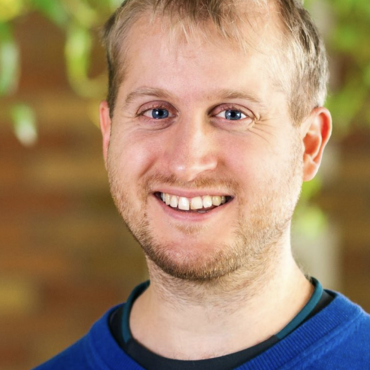
Hype or not, GenAI seems to be staying with us, forever changing humanity and how we do our jobs. Those who jump on the bandwagon too late, will struggle to speed up to reach technological advancement. On the other hand, the situation is not as bad as many say: GenAI is not replacing humans, and it's not rocket science that people would struggle to pick up quickly. On the other hand, people with new, relevant skill sets will thrive over those who decide to keep following the old ways. As usual, history holds the answer to how change happens, and how it impacts us, individually and as a society. Péter invites you to learn from other Hungarians: inventors, players and musicians. He will show how you can adapt to this new way of living, and why it's so important to pick up hands-on knowledge in prompt engineering and related areas. Péter will bring his practical experience working with EPAM's AI/RUN teams, and show approaches and a mindset that you'll be able to bring home and leverage at your work as well.
Actividad en inglés
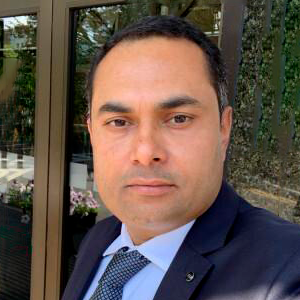
IBM Quality Engineering enables organizations to quickly and efficiently deliver quality products by leveraging a unique optimization, automation and cognitive capabilities leveraging a clients own existing knowledge base and reusable IBM industry assets.
Actividad en inglés
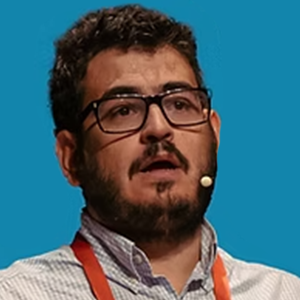
Join us for a hands-on, insight-rich workshop where theory meets practice through real-world case studies from Model Context Protocol (MCP) case studies in QA World. In this session, we’ll explore how we can build MCP for different QA tools and practises and integrate in our QA pipeline. From UI functional testsing to performance testing w will uncover principles and ways to boost your team's productivity and make them AI super heros. What You’ll Learn: - Proven approaches to designing scalable and maintainable test automation frameworks. - How MCPs integrate automation into CI/CD pipelines for continuous quality. - Lessons learned from real-world challenges—what worked, what didn’t, and why. - Tooling insights: from Selenium and Playwright to Grafana, Azure DevOps and beyond. * Actividad en inglés

Activity in Spanish
How a single OpenAPI specification can open multiple testing paths. In this talk, we explore the multiverse of API testing, where a single OpenAPI specification allows us to automate functional, performance, contractual, mocking, and security tests, among others. Through practical examples and with the help of AI and tools like Postman, Bruno, Karate, k6, Prism, Dredd, and automated environments in Docker and CI/CD, we'll see how to transform a definition into a comprehensive test plan, integrate it into CI/CD pipelines, and choose the right tool for each dimension. A practical guide to designing modern, sustainable, and multiversal testing strategies.
Activity in Spanish
In this talk, we'll explore how to improve the visual quality of our interfaces by combining three key elements: Storybook, for isolating and documenting components. Percy, for automated visual testing and detecting subtle changes across different browsers. Artificial Intelligence, for analyzing visual differences and generating clear summaries in natural language. We'll show you how to integrate these into a CI/CD pipeline that runs Percy after each change, feeds an AI model, and produces actionable visual reports. The goal: to achieve smarter, faster, and more scalable visual testing.
Activity in Spanish
Based on the phrase "three sad tigers," let's talk about the practice of the three friends who work together in teams with the goal of building a quality product, and how to take quality to the next level through conversations, allowing the team to mature and proactively evaluate aspects that are sometimes left unsaid when teams feel they are fighting each other.

Activity in Spanish
In this talk, I want to share how the Shift Left approach has changed the way I understand and apply quality in projects. I'll discuss the importance of incorporating testing from the earliest stages of software development, not just to find bugs, but to prevent them and generate value from the start. I'll show how this mindset improves collaboration between QA, development, and business, and how it's possible to put it into practice even in demanding environments like banking (my current field). More than a technique, it's a way of working with focus, efficiency, and shared responsibility.

Activity in Spanish
In an increasingly digital world, where security breaches can compromise not only systems but also the reputation and continuity of organizations, ensuring information protection can no longer be the sole responsibility of the cybersecurity team. Software quality and security must go hand in hand from the earliest stages of development, and testing plays a key role in this mission. This talk presents a modern and practical approach to incorporating security testing into the software development lifecycle, from design to deployment.

Activity in Spanish
We will explore how BrowserStack's AI Agents automate and optimize the entire testing lifecycle, from bug detection to intelligent case prioritization, and facilitate the creation of accessible applications through testing on real devices that comply with standards such as WCAG and ADA. The session will include a hands-on demonstration of using these AI agents in real-world testing scenarios.
Activity in Spanish
The aim of this talk is to explore how a testing team can function effectively without a formal leader through the concept of distributed leadership. We will examine a real-world example where team members assumed leadership roles based on their expertise in specific areas, such as automation, manual testing, processes, or business knowledge. Furthermore, we will reflect on the underlying conditions that enable distributed leadership to function harmoniously.

ACCREDITATIONS | COFFEE

Actividad en inglés
Artificial Intelligence is rapidly becoming an accepted means of accelerating software engineering and testing activities. Many organizations have already integrated AI into their software development lifecycle, and the demand for AI-assisted engineering continues to grow year over year. A key motivating factor behind the demand is the promise of increased speed and efficiency through automation. Software testing is a prime candidate for AI acceleration due to the generally high costs and significant manual effort involved in validation and verification. As a result, we are seeing an exponential growth in the application and development of tools to support AI-driven test automation. But what does the adoption of AI-driven automation mean for the future of software testing? Is AI going to replace manual testers and/or test automation engineers? It seems like these questions are quickly growing old and repetitive because no one is providing definitive answers based on practical, real-world analysis. Join industry expert Tariq King as he takes you on a journey into the future of software testing. Tariq firmly believes that AI will take over software testing and permanently transform the quality engineering landscape. He postulates that the future of testing will be focused on evaluating human experiences, including testing digital, physical, and experiential touchpoints. In the age of AI, human experience testing will not just be viewed as a quality assurance function, but as a core component of an organization’s business strategy. Welcome to the future of quality where AI specifies, designs, codes, and tests software, leaving the humans to do the one thing the machines can’t – test the human experience.

Activity in Spanish
Quality isn't a one-off activity or solely the tester's responsibility: it's a sustained practice built collectively within the team. The QPAM (Quality Practices Assessment Model) offers a structured way to review, discuss, and improve how each team approaches quality in its daily work. In this talk, I'll share how to use QPAM as a tool to enhance quality strategies from within the team: by fostering honest conversations about what we do, what we don't do, and why. We'll see how QPAM helps us become aware of the current state of our practices, strengthen collaboration, and promote real improvements, aligned with both the technical needs of the context and the business objectives.
Activity in Spanish
During this talk, you'll discover the importance of mocks for your integration tests and how developers can create different mock scenarios without needing to know the other microservices. Most developers simulate external interactions using a mock library within the code, which creates a false sense that everything is working correctly in the microservice. What happens if there's a bug in the code the developers simulated? You'll see a short demonstration where an application has integration tests using a real microservice, and how, with WireMock, developers can create different scenarios, such as introducing latency in the response, generating exceptions in specific situations, or returning different responses depending on the request parameters.

Activity in Spanish
The increasing adoption of AI and LLM models with ever-greater capabilities demands that Quality teams evolve from a deterministic to a probabilistic approach, detecting biases and monitoring undesirable behaviors in production, while simultaneously maintaining the critical, analytical, and inquisitive skills that define us. This talk will address the challenges that the arrival of AI has brought to our field and its main opportunities for improvement in areas such as data quality, explainability, and bias identification.
Activity in Spanish
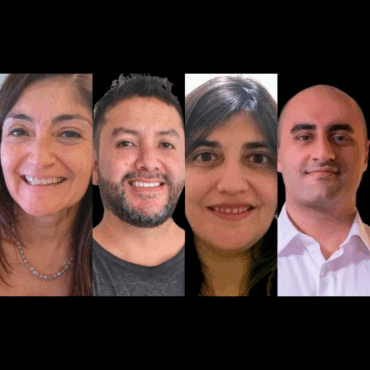
We are experiencing a moment of transformation in the banking industry: advancing technology, bank mergers, increasingly demanding users, and Artificial Intelligence in a growing number of contexts. In this context, QA teams face the challenge of maintaining quality, adapting to change, and demonstrating their value. In this panel, we will discuss what this reality is like from the inside: what technical decisions are made, how quality is scaled in complex structures, and what role QA plays in today's banking landscape. Panelists: Natalia Higueret, Ruben Aguirre, Silvina Miranda, and Mehran Nazar. Moderated by Cecilia Benassi
Activity in Spanish
In this talk, we'll introduce what a MCP is and why it's revolutionizing our everyday tools. Through a hands-on demo, we'll explore different types of MCPs and their specific uses for testers. We'll see how to query complex databases in natural language with MCP SQL, and how to simplify collaborative work on projects with GitHub MCP. An approach to how these AI-powered tools can improve the efficiency, accuracy, and agility of your testing workflow.
Activity in Spanish
In this talk, we explore the evolution of software testing from traditional approaches to a new era powered by Artificial Intelligence. Through key steps, we show how AI can automatically generate test cases, detect errors before they occur, analyze results more efficiently, and dynamically adapt to system changes. We also highlight the role of intelligent assistants and the importance of adopting a culture of continuous learning in QA. This transition not only improves software speed and quality but also redefines the tester's role as a strategic professional in the digital age.

Activity in Spanish
We're living in the age of AI, and naturally we want to incorporate AI into QA, but do we really know how to leverage it? In this talk, I want to open an honest conversation about the key questions to ask before implementing a solution: What do we want it for? What problem do we expect it to solve? How do we know if it's working? I'll also share some real-world examples and challenges I've encountered along the way. The idea isn't to talk about tools, but about how to use AI thoughtfully, with focus and purpose—not just because it's trendy.
Activity in Spanish
BDD is a practice that is growing in popularity, but its adoption is not straightforward. This is partly because it involves the use of new tools, but also because it requires changes in processes and collaboration dynamics. In this talk, I will share several recommendations based on more than 10 years of experience using and teaching BDD. We will cover topics such as scenario identification, scenario writing with Gherkin, and subsequent automation. The talk is primarily geared toward testers, developers, functional analysts, and business specialists.

Activity in Spanish
In this talk, we'll explore the fundamentals of automated testing, focusing on the automation pyramid and its various layers. We'll see how artificial intelligence can be integrated into each of these layers to enhance its effectiveness. We'll also cover the concept of an automation platform, understanding what building one entails and how to practically apply AI to achieve concrete results. Through this integration, the goal is to move towards a more robust, flexible, and scalable automated testing strategy.
Activity in Spanish
In this talk we will explore the technical and strategic challenges of this type of transition, focusing on the critical role of Quality in ensuring a safe, efficient and scalable integration.

Activity in Spanish
We invite you to explore the AI-powered accelerators we've developed at NTT DATA, designed to boost efficiency at every stage of the testing lifecycle. We'll take test automation to the next level, reducing time and effort while enhancing quality. Scenario generation, automation, and much more. A path to infinite efficiency? Come and discover them and be amazed.


Activity in Spanish
A QA professional's life can be compared to a video game: advancing levels, facing challenges, and defeating monsters and bosses. Just like in RPGs, each person gains experience, skills, tools, and allies to tackle challenges in their work, finances, and personal life. This talk will be full of power-ups, extra lives, and levels to learn. Get ready to level up and conquer your professional life like a true QA hero!
Activity in Spanish
Artificial intelligence is redefining testing: it accelerates tasks, enhances skills, and enables the delivery of high-quality value in less time. In this talk, I will present concrete metrics to measure this impact and communicate it clearly to decision-makers. I will also share real-world examples of functional testers scaling their contributions with AI and how to support this change process. We will also discuss how to start with low risk, activating results from the very first use. This talk is designed for quality leaders, evolving testers, and organizations seeking frictionless transformation.

Activity in Spanish
Something has changed. In this demo, we'll learn how to build automated tests powered by Lippia's MCP Server. You give it a user story... and it does the rest: interprets, navigates, generates features, glues code, executes, and reports. A new way to automate testing that challenges everything we know. It's not science fiction. It's the beginning of an era where AI writes, executes, and reports its own tests. Are you ready to see how testing is transformed?

Activity in Spanish
We will analyze how Quality Engineering Insights (QEI) offers comprehensive visibility into key metrics such as coverage, defect leakage, stability, and cycle speed, while Test Reporting & Analytics (TRA) provides centralized reporting, AI-powered failure analysis, custom dashboards, and automated Quality Gates. The session includes a hands-on demonstration of how these AI tools drive real improvements in test cycle efficiency and quality.

Actividad en inglés y español
Moderator: Javier Re / Panelists: Tariq King and Dionny Santiago.

Activity in Spanish
GitHub is redefining innovation in development by integrating DevSecOps and AI to automate, secure, and optimize applications at every stage. In this hands-on session, we'll review how, with the help of Copilot, we can automate pipelines, secure every commit, improve code quality and best practices, and simultaneously enhance real-time collaboration, transforming challenges into opportunities for innovation and competitiveness. Discover practical strategies that transform challenges into competitive advantages and position you at the forefront of the digital revolution. Accelerate your success!

Activity in Spanish
The talk will focus on the use of MCP Midscene, an AI agent designed to automate the creation of web tests. It will explore how Midscene converts natural language instructions into complete end-to-end tests, eliminating the need for manual coding. It will explain how the agent interacts directly with the browser to perform actions and simultaneously generates the corresponding Playwright code. Finally, it will cover how these tests are saved in the repository for use in continuous integration workflows, enabling significant time and resource savings in test automation and reporting.

Activity in Spanish
What if the backlog could talk? What if your IDE could understand the context, write tests, suggest edge cases, and help you test software without losing focus? Lack of time and technical knowledge are always cited as reasons for not starting to automate tests. In this talk, I'll teach you how to break free from that death spiral without needing to be an expert. I'll show you how to automate tests AI-First using Playwright's MCP Server and GitHub, all orchestrated by agent IDEs and powered by robust pre-prompting rules that will prevent you from falling into the usual trap.
Activity in Spanish
The emergence of generative AI models in our applications has not only changed what systems do, but also how we test them. Traditional testing, based on fixed outputs and repeatable behaviors, is no longer sufficient when faced with responses that can vary with each interaction. In this talk, we'll share how we at QAlified tackled this new challenge: we started by evaluating responses manually, encountered significant difficulties, and gradually built an automated approach that allows us to use AI to evaluate AI.
Activity in Spanish
As a testing leader, I understand that software quality requires balance. Our processes must avoid both inertia (the "calm") and chaos (the "hurricane"). The key is to ask ourselves: What does quality mean for our software, and why are we pursuing it? Are our current processes truly contributing to that goal? Is the team aligned and working collaboratively to achieve it? Are we comprehensively addressing all aspects of quality? Often, the answers to these questions lead us to "reshuffle the deck and start over." It's about redefining processes to adapt to each team's reality, ensuring that quality is achieved and maintained consistently and visibly. The answers often lead us to the conclusion that we need to completely rethink our processes. This talk focuses on how, through real-world experiences in companies across the region, we reformulated and adapted quality strategies to help teams reach their full potential.

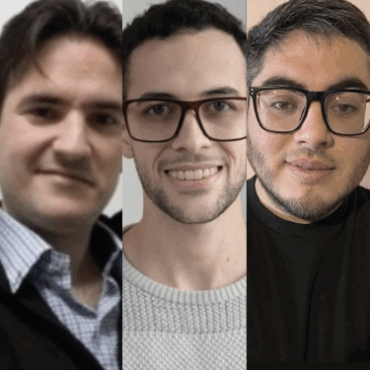
Activity in Spanish
In this talk, we will address the value of data as a key tool for making objective decisions in the field of quality. We will see how well-defined indicators not only allow us to detect deviations and opportunities for improvement, but also strengthen discussions by providing concrete evidence to support our actions.
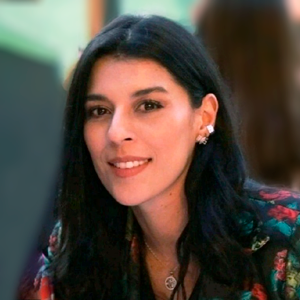
Activity in Spanish
We will explore how an organization's growth is impacted by testing and how it depends on its leadership. Hermann Hesse's Steppenwolf serves as a guide to discuss the internal challenges we face as technical leaders when we fail to recognize ourselves as strategic agents. I propose a vision where testing drives organizations with a human touch. This proposal connects the evolution of leadership with the demands of Industry 4.0 and perhaps 5.0 organizations, reminding us that a company cannot evolve if its leaders do not transform first.

 Rodrigo Damián Sosa Carballido
Activity in Spanish
In a world where development and QA teams work from different countries, how can we turn geographic diversity into an advantage for the software lifecycle? In this closing talk, Raissa and Rodrigo will discuss what it means to work as a single team when we're spread across the globe. Using specialized pods and units, a touch of AI, and DevSecOps practices, they'll show how to break down silos, gain speed, and maintain quality. More than just a methodology, it's a new way of collaborating in the digital age.
Actividad en inglés
Artificial Intelligence is rapidly becoming an accepted means of accelerating software engineering and testing activities. Many organizations have already integrated AI into their software development lifecycle, and the demand for AI-assisted engineering continues to grow year over year. A key motivating factor behind the demand is the promise of increased speed and efficiency through automation. Software testing is a prime candidate for AI acceleration due to the generally high costs and significant manual effort involved in validation and verification. As a result, we are seeing an exponential growth in the application and development of tools to support AI-driven test automation. But what does the adoption of AI-driven automation mean for the future of software testing? Is AI going to replace manual testers and/or test automation engineers? It seems like these questions are quickly growing old and repetitive because no one is providing definitive answers based on practical, real-world analysis. Join industry expert Tariq King as he takes you on a journey into the future of software testing. Tariq firmly believes that AI will take over software testing and permanently transform the quality engineering landscape. He postulates that the future of testing will be focused on evaluating human experiences, including testing digital, physical, and experiential touchpoints. In the age of AI, human experience testing will not just be viewed as a quality assurance function, but as a core component of an organization’s business strategy. Welcome to the future of quality where AI specifies, designs, codes, and tests software, leaving the humans to do the one thing the machines can’t – test the human experience.
Activity in Spanish
Quality isn't a one-off activity or solely the tester's responsibility: it's a sustained practice built collectively within the team. The QPAM (Quality Practices Assessment Model) offers a structured way to review, discuss, and improve how each team approaches quality in its daily work. In this talk, I'll share how to use QPAM as a tool to enhance quality strategies from within the team: by fostering honest conversations about what we do, what we don't do, and why. We'll see how QPAM helps us become aware of the current state of our practices, strengthen collaboration, and promote real improvements, aligned with both the technical needs of the context and the business objectives.
Activity in Spanish
Vivimos un momento de transformación en la industria de banking: tecnología que avanza, fusiones entre bancos y usuarios cada vez más exigentes, Inteligencia Artificial en cada vez más contextos. En este contexto, los equipos de QA enfrentan el desafío de sostener la calidad, adaptarse al cambio y demostrar su valor. En este panel vamos a conversar sobre cómo se vive esa realidad desde adentro: qué decisiones técnicas se toman, cómo se escala calidad en estructuras complejas y qué rol juega QA en la banca de hoy. Panelistas: Natalia Higueret, Ruben Aguirre, Silvina Miranda y Mehran Nazar. Modera Cecilia Benassi
Activity in Spanish
Estamos viviendo la era de la IA, y lógicamente queremos incorporar IA en QA, pero ¿realmente sabemos cómo sacarle provecho? En esta charla quiero abrir una conversación honesta sobre las preguntas clave antes de implementar una solución: ¿para qué la queremos?, ¿qué esperamos que nos resuelva?, ¿cómo sabemos si está funcionando? También voy a contar algunos ejemplos reales y desafíos que me encontré en el camino. La idea no es hablar de herramientas, sino de cómo usar la IA con criterio, con foco y con propósito… no solo porque está de moda.
Activity in Spanish
In this talk we will explore the technical and strategic challenges of this type of transition, focusing on the critical role of Quality in ensuring a safe, efficient and scalable integration.
Activity in Spanish
A QA professional's life can be compared to a video game: advancing levels, facing challenges, and defeating monsters and bosses. Just like in RPGs, each person gains experience, skills, tools, and allies to tackle challenges in their work, finances, and personal life. This talk will be full of power-ups, extra lives, and levels to learn. Get ready to level up and conquer your professional life like a true QA hero!
Activity in Spanish
Artificial intelligence is redefining testing: it accelerates tasks, enhances skills, and enables the delivery of high-quality value in less time. In this talk, I will present concrete metrics to measure this impact and communicate it clearly to decision-makers. I will also share real-world examples of functional testers scaling their contributions with AI and how to support this change process. We will also discuss how to start with low risk, activating results from the very first use. This talk is designed for quality leaders, evolving testers, and organizations seeking frictionless transformation.
Actividad en inglés y español
Moderator: Javier Re / Panelists: Tariq King and Dionny Santiago.
Activity in Spanish
¿Y si el backlog hablara? ¿Y si tu IDE pudiera entender el contexto, escribir tests, sugerir edge cases y ayudarte a testear software sin perder el foco? Siempre se alude a la falta de tiempo y de conocimientos técnicos para comenzar a automatizar pruebas. En esta charla te enseñaré a salir de esa espiral de la muerte sin necesidad de ser un experto, te mostraré cómo automatizar pruebas de manera AI-First usando los MCP Server de Playwright y GitHub, todo orquestado por IDEs agénticos y potenciado mediante robustas reglas de pre-prompting que evitarán que caigas en la alucinación usual.
Actividad en inglés
In this talk, we will address the value of data as a key tool for making objective decisions in the field of quality. We will see how well-defined indicators not only allow us to detect deviations and opportunities for improvement, but also strengthen discussions by providing concrete evidence to support our actions.
Activity in Spanish
During this talk, you'll discover the importance of mocks for your integration tests and how developers can create different mock scenarios without needing to know the other microservices. Most developers simulate external interactions using a mock library within the code, which creates a false sense that everything is working correctly in the microservice. What happens if there's a bug in the code the developers simulated? You'll see a short demonstration where an application has integration tests using a real microservice, and how, with WireMock, developers can create different scenarios, such as introducing latency in the response, generating exceptions in specific situations, or returning different responses depending on the request parameters.
Activity in Spanish
In this talk, we'll introduce what a MCP is and why it's revolutionizing our everyday tools. Through a practical demo, we'll explore different types of MCPs and their specific uses for testers. We'll see how to query complex databases in natural language with MCP SQL, and how to simplify collaborative work on projects with GitHub MCP. We'll also cover how these AI-powered tools can improve the efficiency, accuracy, and agility of your testing workflow.
Activity in Spanish
BDD is a practice that is growing in popularity, but its adoption is not straightforward. This is partly because it involves the use of new tools, but also because it requires changes in processes and collaboration dynamics. In this talk, I will share several recommendations based on more than 10 years of experience using and teaching BDD. We will cover topics such as scenario identification, scenario writing with Gherkin, and subsequent automation. The talk is primarily geared toward testers, developers, functional analysts, and business specialists.
Activity in Spanish
We invite you to explore the AI-powered accelerators we've developed at NTT DATA, designed to boost efficiency at every stage of the testing lifecycle. We'll take test automation to the next level, reducing time and effort while enhancing quality. Scenario generation, automation, and much more. A path to infinite efficiency? Come and discover them and be amazed.
Activity in Spanish
Something has changed. In this demo, we'll learn how to build automated tests powered by Lippia's MCP Server. You give it a user story... and it does the rest: interprets, navigates, generates features, glues code, executes, and reports. A new way to automate testing that challenges everything we know. It's not science fiction. It's the beginning of an era where AI writes, executes, and reports its own tests. Are you ready to see how testing is transformed?
Activity in Spanish
GitHub is redefining innovation in development by integrating DevSecOps and AI to automate, secure, and optimize applications at every stage. In this hands-on session, we'll review how, with the help of Copilot, we can automate pipelines, secure every commit, improve code quality and best practices, and simultaneously enhance real-time collaboration, transforming challenges into opportunities for innovation and competitiveness. Discover practical strategies that transform challenges into competitive advantages and position you at the forefront of the digital revolution. Accelerate your success!
Activity in Spanish
La irrupción de modelos de IA generativa en nuestras aplicaciones no solo cambió lo que los sistemas hacen, sino también cómo debemos probarlos. El testing tradicional, basado en salidas fijas y comportamientos repetibles, ya no alcanza frente a respuestas que pueden variar en cada interacción. En esta charla compartiremos cómo en QAlified enfrentamos este nuevo desafío: partimos evaluando las respuestas manualmente, nos encontramos con importantes desafíos, y fuimos construyendo un enfoque automatizado que nos permite usar IA para evaluar IA.
Activity in Spanish
We will explore how an organization's growth is impacted by testing and how it depends on its leadership. Hermann Hesse's Steppenwolf serves as a guide to discuss the internal challenges we face as technical leaders when we fail to recognize ourselves as strategic agents. I propose a vision where testing drives organizations with a human touch. This proposal connects the evolution of leadership with the demands of Industry 4.0 and perhaps 5.0 organizations, reminding us that a company cannot evolve if its leaders do not transform first.
Activity in Spanish
The increasing adoption of AI and LLM models with ever-greater capabilities demands that Quality teams evolve from a deterministic to a probabilistic approach, detecting biases and monitoring undesirable behaviors in production, while simultaneously maintaining the critical, analytical, and inquisitive skills that define us. This talk will address the challenges that the arrival of AI has brought to our field and its main opportunities for improvement in areas such as data quality, explainability, and bias identification.
Activity in Spanish
In this talk, we explore the evolution of software testing from traditional approaches to a new era powered by Artificial Intelligence. Through key steps, we show how AI can automatically generate test cases, detect errors before they occur, analyze results more efficiently, and dynamically adapt to system changes. We also highlight the role of intelligent assistants and the importance of adopting a culture of continuous learning in QA. This transition not only improves software speed and quality but also redefines the tester's role as a strategic professional in the digital age.
Activity in Spanish
In this talk, we'll explore the fundamentals of automated testing, focusing on the automation pyramid and its various layers. We'll see how artificial intelligence can be integrated into each of these layers to enhance its effectiveness. We'll also cover the concept of an automation platform, understanding what building one entails and how to practically apply AI to achieve concrete results. Through this integration, the goal is to move towards a more robust, flexible, and scalable automated testing strategy.
Activity in Spanish
We will analyze how Quality Engineering Insights (QEI) offers comprehensive visibility into key metrics such as coverage, defect leakage, stability, and cycle speed, while Test Reporting & Analytics (TRA) provides centralized reporting, AI-powered failure analysis, custom dashboards, and automated Quality Gates. The session includes a hands-on demonstration of how these AI tools drive real improvements in test cycle efficiency and quality.
Activity in Spanish
The talk will focus on the use of MCP Midscene, an AI agent designed to automate the creation of web tests. It will explore how Midscene converts natural language instructions into complete end-to-end tests, eliminating the need for manual coding. It will explain how the agent interacts directly with the browser to perform actions and simultaneously generates the corresponding Playwright code. Finally, it will cover how these tests are saved in the repository for use in continuous integration workflows, enabling significant time and resource savings in test automation and reporting.
Activity in Spanish
As a testing leader, I understand that software quality requires balance. Our processes must avoid both inertia (the "calm") and chaos (the "hurricane"). The key is to ask ourselves: What does quality mean for our software, and why are we pursuing it? Are our current processes truly contributing to that goal? Is the team aligned and working collaboratively to achieve it? Are we comprehensively addressing all aspects of quality? Often, the answers to these questions lead us to "reshuffle the deck and start over." It's about redefining processes to adapt to each team's reality, ensuring that quality is achieved and maintained consistently and visibly. The answers often lead us to the conclusion that we need to completely rethink our processes. This talk focuses on how, through real-world experiences in companies across the region, we reformulated and adapted quality strategies to help teams reach their full potential.
Rodrigo Damián Sosa Carballido
Activity in Spanish
In a world where development and QA teams work from different countries, how can we turn geographic diversity into an advantage for the software lifecycle? In this closing talk, Raissa and Rodrigo will discuss what it means to work as a single team when we're spread across the globe. Using specialized pods and units, a touch of AI, and DevSecOps practices, they'll show how to break down silos, gain speed, and maintain quality. More than just a methodology, it's a new way of collaborating in the digital age.
Boost your professional profile with this experience
The Training Day was an exclusive post-event session designed to maximize learning and provide updates on emerging industry trends. Each training session was led by recognized experts with years of experience in the sector.
The Training Day took place at Torre Galicia on September 11, 2025..









 Péter Földházi
  Vinay Rao
  Ioannis Papadakis
  Gonzalo de Cos
  Carla Orue Mascheroni
  Mauricio Nicolás Oubiña
  Jorge Erickson Paz Diaz
  Evelyn Méndez
  Blanca Moreno
  Carlos Salazar
  Jesús Rentería
  Nadia Cavalleri
  Tariq King
  Claudia Badell
  Andrés Sacco
  Patricio Santa Cruz Pulgar
  Antonio Crespo
  Marcela Mellado
  Karime Salomon
  Nicolás Paez
  Leonardo Perez
  Sofia Ramirez
  Diego Melo
  Lobsang Monterola Diaz
  Martín Cejas González
  Leandro Melendez
  Daniella Rojas
  Javier Re
  Alejo Carbonari
  Dionny Santiago
  Axel Labruna
  Nicolás Rodriguez
  Carlos Gauto
  Natalia Nario
  Maria Amelia Castañeda
  Santiago Cabral
  Fernando Pittito Benítez
  Axel Roldan
  Mercedes Quintero Martínez
  Raissa Yoshikado
